Netizens are expressing significant anger towards the virtual mood board app Pinterest for its promotion of AI-generated images.
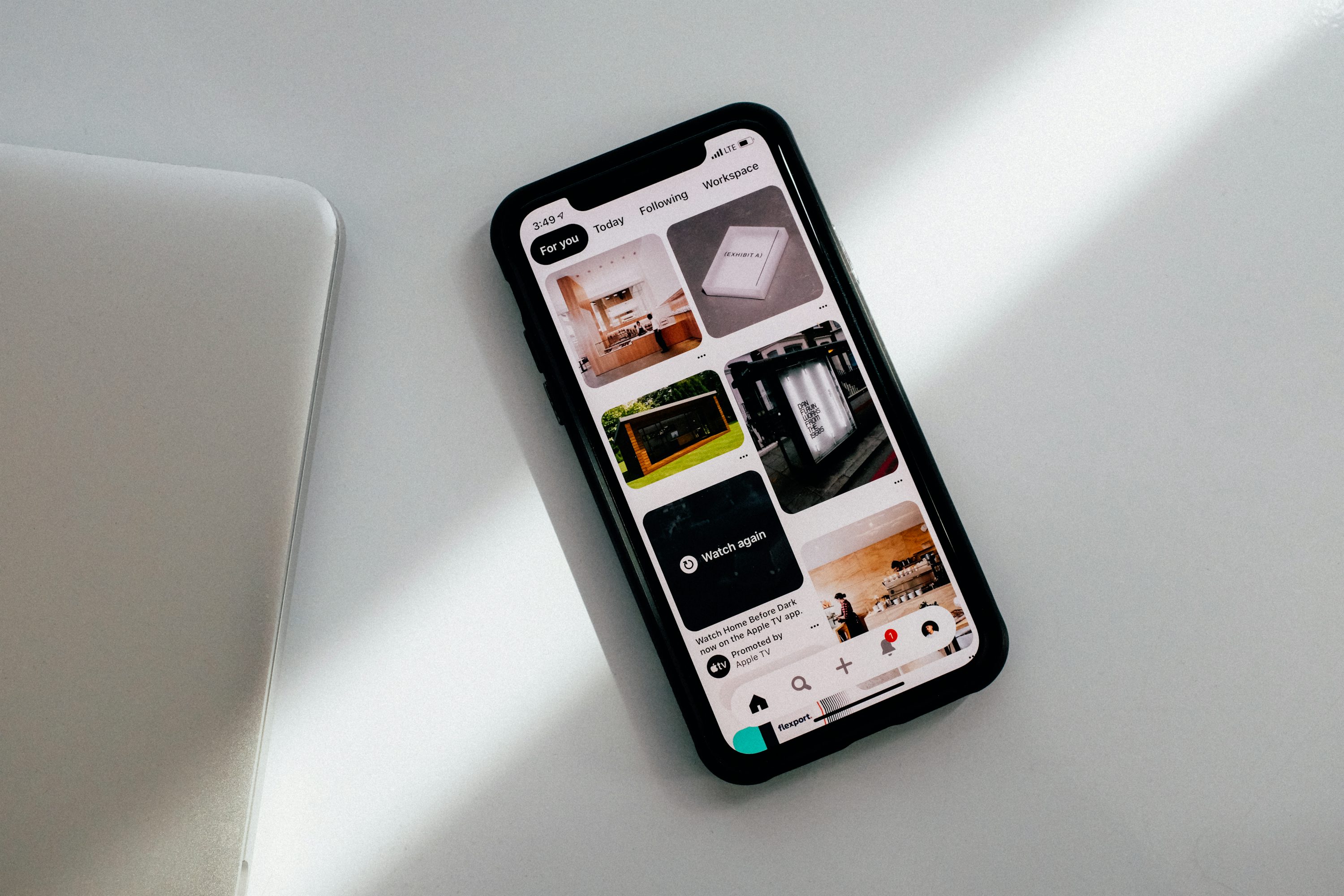
In recent months, Pinterest has come under fire for its use of AI. Long-time users say their feeds are consumed purely with AI-generated images and adverts, going as far as to suggest that the app has become ‘unusable’ as they slowly take away the aspects of human, creative inspiration which previously defined the app’s contents.
I was inspired to look into this issue after I came across a TikTok by creator @roryteddyjonesy, who is one of the many users unhappy with Pinterest’s newfound promotion of AI. Under this video, I saw thousands of comments that all expressed similar anger, motivating me to delve in deeper.

screenshot from @roryteddyjonesy ‘s comment section
Below is a snippet from my own feed, when searching the phrase ‘home inspiration’. In this small screenshot alone, we can identify a total of 4 adverts. Upon closer inspection, I noticed that one of the images was entirely AI-generated. By clicking on that image, as you can see, how the entire recommended feed swiftly becomes dominated by similar AI images.
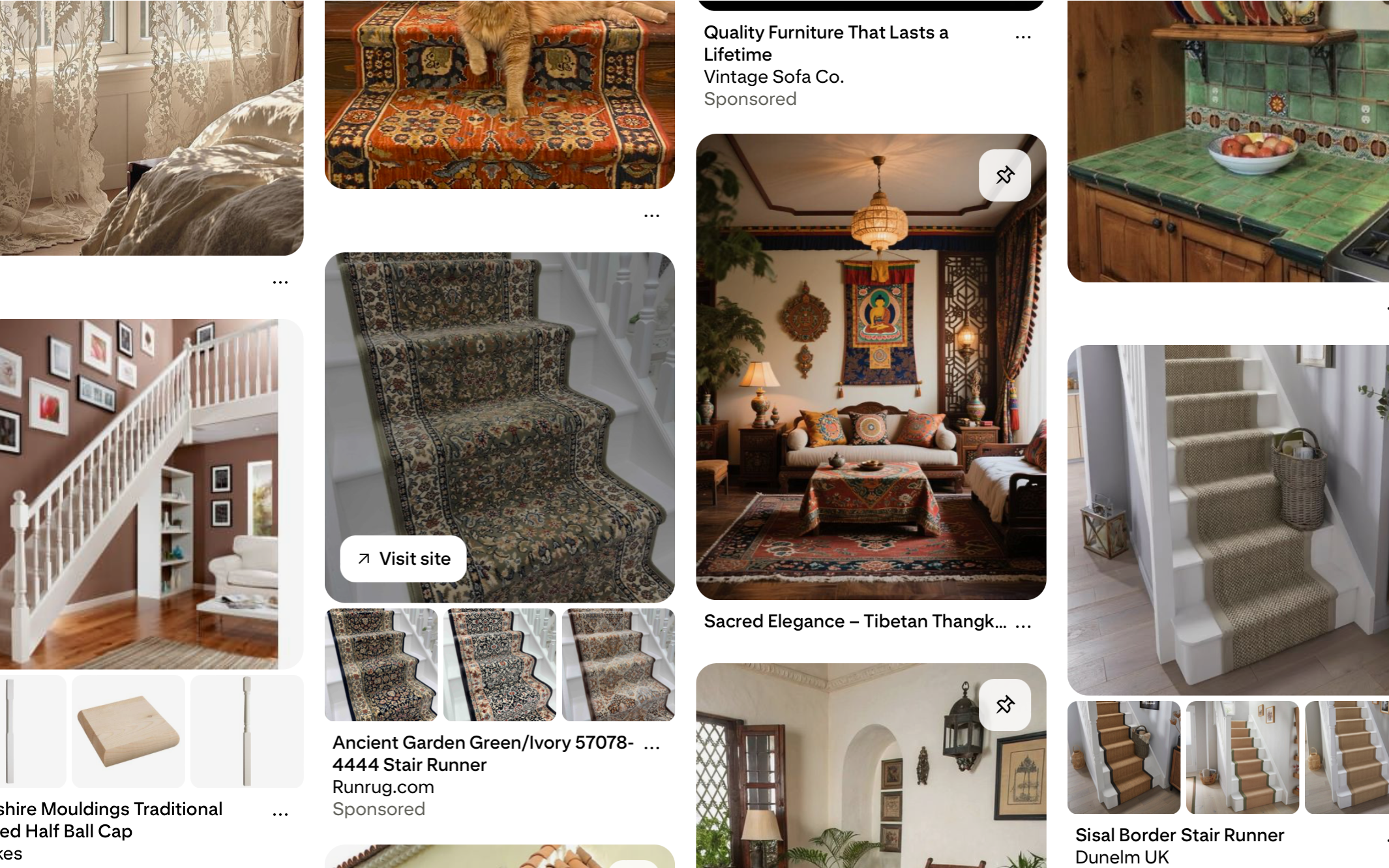

This search for AI took me around 5 minutes to find. It was a shocking revelation to notice how quickly and easily we can find ourselves overrun and relying on AI content for inspiration on the littlest of things without realising. This is particularly relevant for older users of the app who may not be entirely accustomed to identifying AI and recognising what content is real or not.
Some may be asking why this is a problem?
As one of the leading apps for individuals to share and save ideas for various different areas, the use of AI has been massively problematic for many industries.
The nail and hair industry is a clear example of where AI usage has become problematic. From conversations I have personally had with friends and family in this field, it has been said that there is an unfortunate increase in clients unknowingly bringing in AI-generated nails, leaving many people disappointed or even angry that they cannot physically replicate such a design or hair colour.
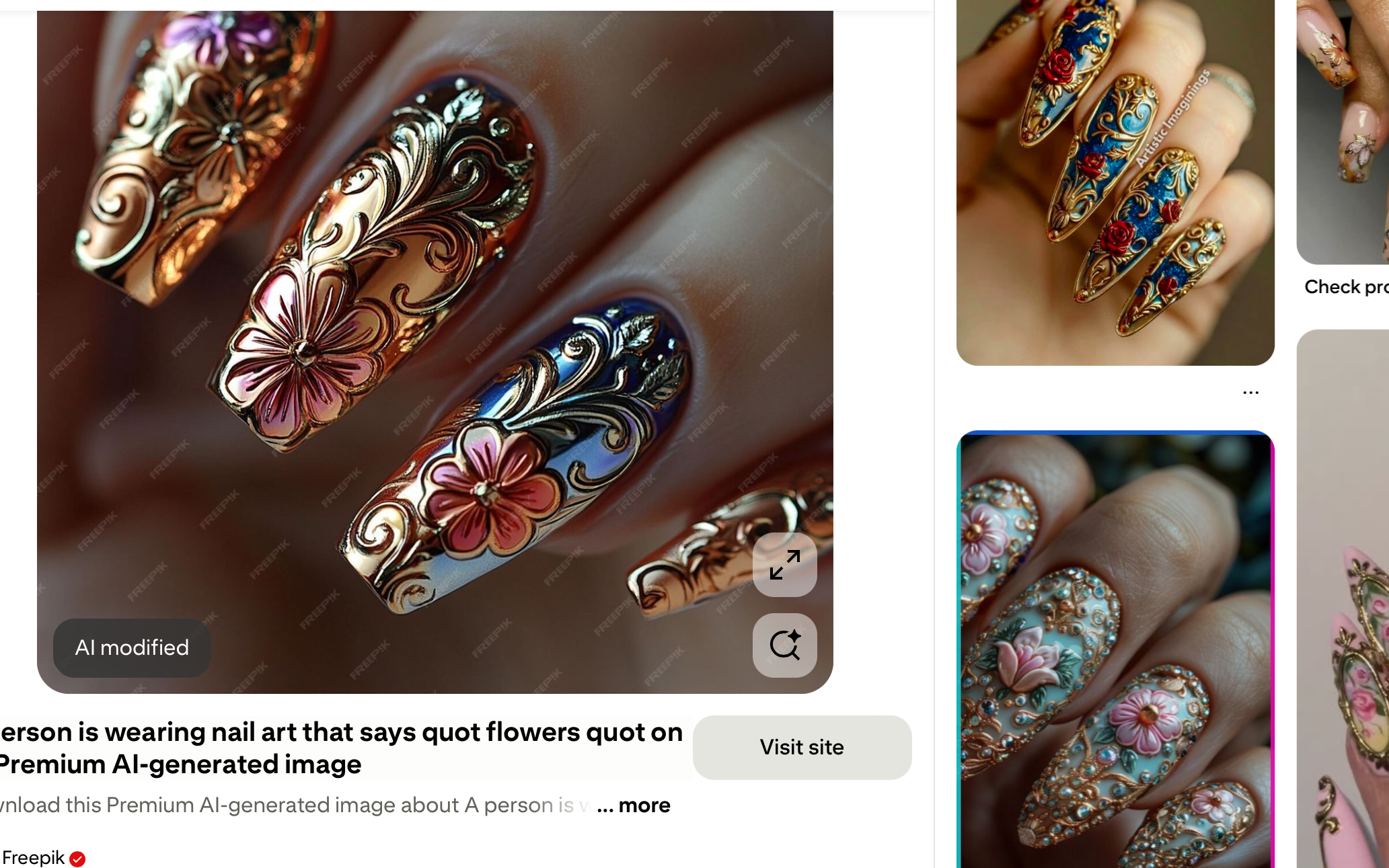
Here we see an example of AI-generated nail images, which I have come across on Pinterest. While these designs above may be more realistic for some talented nail artists to replicate, some are entirely impossible, such as these ‘crystal, glass nails’, below which my nail tech has personally noted as a ‘ban-worthy’ offence in her salon, should you show her this ‘design’.
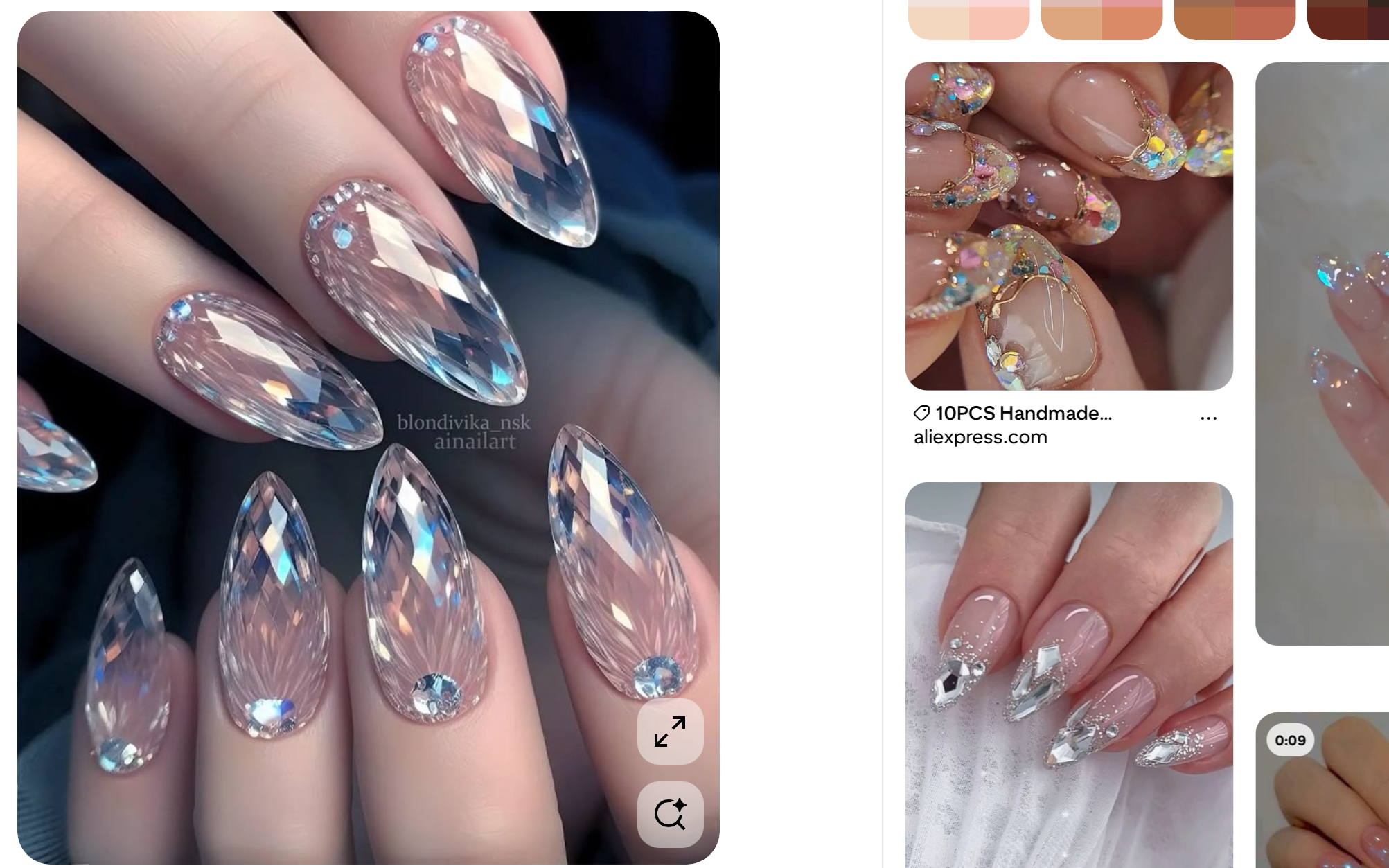
Beyond the impracticality of these pictures, apps like Pinterest reshaping their algorithm to prioritise the promotion of AI images is seen as an act insulting to many within the creative field. Pinterest has always been a ‘saving grace’ for small businesses to promote their work in a free and relaxed environment. But now, as the app chooses to knowingly push AI, artists individuals will only struggle.
This comes at a time when more and more creative jobs are at risk due to the widespread use of AI in various industries. It seems to be a slap in the face for these creatives and highlights an abandonment of the company’s initial goal for this app’s purpose.
This is only further supported by the undeniable fact that a lot of AI-generated imagery only exists by plagiarising existing works, morphing them into their own images, which ultimately strips away all the creativity that human-published works would provide.
By prioritising AI in this way, Pinterest has created a paradox, where this tool, designed to foster the discovery of new ideas, actively hinders the creative process.
There isn’t much we can do to realign the values of Pinterest or eradicate the use of AI from creative spaces at the rate it is being implemented. However, there isn’t much we can do to realign the values of Pinterest or eliminate the use of AI from creative spaces, given how quickly it is being adopted. However, we should feel encouraged to exercise due diligence and do our best as creative individuals to support each other by learning to recognise what AI looks like. Sometimes it can be too convincing to notice, but there are usually some telltale signs.
Ways to Identify Ai
- Ai isn’t too good at creating detailed patterns -look at intricate/symmetrical designs: do they make sense?
- Strange details in hands, faces, or ears – AI often struggles with realistic anatomy (extra fingers, distorted ears, odd teeth).
- Unnatural backgrounds – objects may blend together, look warped, or not follow perspective properly.
- Odd reflections and shadows – mirrors, glass, or shiny surfaces often don’t reflect accurately.
- Overly perfect or plastic-like skin – textures may look airbrushed or too uniform.
- Inconsistent clothing or accessories – buttons, jewelry, or glasses may look melted, incomplete, or mismatched.
- Unrealistic interactions – people holding objects may not grip them correctly, or objects may “float.”
This is by no means an exhaustive list, but it does highlight the most common giveaways in AI-generated images. These flaws tend to appear again and again.
So while AI tools are improving rapidly, keeping an eye out for these recurring patterns remains one of the most reliable ways to tell when an image isn’t quite human-made.
 The Khosah Review
Leave a comment